
Video content has become the cornerstone of digital marketing, with audiences consuming billions of hours across social platforms daily. Content creators face a persistent challenge: producing engaging videos is traditionally time-consuming, requiring scripting, filming, editing expertise, and expensive equipment.
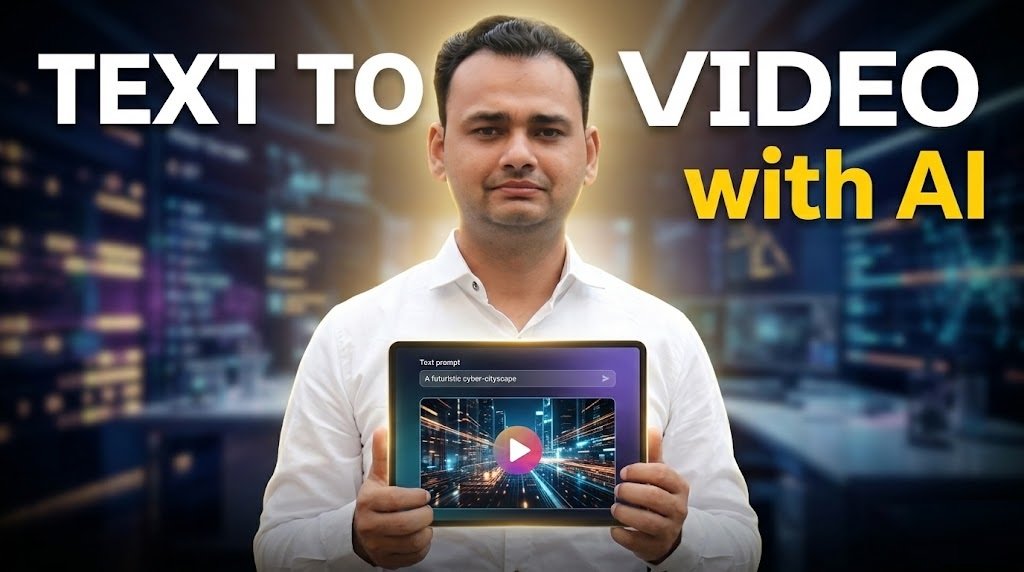
Many marketers and small business owners struggle to keep pace with the demand for fresh video content while managing limited resources and tight deadlines. Text to video AI technology emerges as a game-changing solution, transforming written content into professional videos within minutes rather than hours or days.
This innovative approach leverages artificial intelligence to automate the entire video production process, eliminating technical barriers that once prevented creators from scaling their video output. Throughout this article, you’ll discover how text to video AI works, explore practical tools like HailuoAI, learn a step-by-step process for generating videos from text, and understand the tangible benefits this technology brings to modern content creation workflows.
What is Text to Video AI? Understanding the Basics
Text to video AI represents a breakthrough technology that automatically converts written content into polished video presentations without manual filming or complex editing. At its core, this innovation harnesses natural language processing to interpret your text input, understanding context, tone, and key messaging.
 The AI then generates corresponding visuals—selecting relevant images, video clips, animations, and transitions that align with your narrative. Advanced algorithms coordinate multiple elements simultaneously: synthesizing voiceovers that narrate your script, timing visual sequences to match spoken words, and applying professional-grade effects that enhance viewer engagement.
Unlike traditional video production requiring cameras, studios, and editing software expertise, text to video AI platforms operate through intuitive interfaces where you simply input your written content and receive a finished video within minutes. The technology draws from vast libraries of stock footage, graphics, and audio elements, intelligently assembling them based on your text’s meaning and intent.
This automation democratizes video creation, enabling anyone with a message to produce broadcast-quality content regardless of technical background. As text to video AI continues evolving, it incorporates machine learning improvements that refine output quality, expand creative options, and deliver increasingly sophisticated results that rival professionally produced videos.
Benefits of AI Video Creation for Content Creators
AI video creation fundamentally transforms how content creators approach video production by collapsing timelines that once stretched across days into mere minutes. Where traditional video projects demand hours of filming, editing, and post-production work, text to video AI generates polished content while you focus on strategy and messaging.

This time-efficiency proves invaluable for social media managers juggling multiple campaigns, educators producing course materials under deadline pressure, and entrepreneurs building brand presence without dedicated production teams. The technology requires virtually no technical expertise—creators who’ve never touched editing software can produce professional videos through simple text input and intuitive controls.
This accessibility removes the steep learning curve associated with conventional video tools, empowering writers, marketers, and subject matter experts to become video producers overnight. Beyond efficiency, AI video creation excels at transforming static written content into engaging visual narratives that capture attention and boost retention rates.
Blog posts convert into shareable social videos, product descriptions become compelling demonstrations, and email newsletters evolve into dynamic video updates. The video from text process maintains your authentic voice while packaging messages in formats audiences prefer, addressing the critical need for engaging content that stands out in crowded digital spaces. For creators balancing quality demands with resource constraints, AI video creation delivers the perfect solution—professional output without professional overhead.
How to Choose the Right Text to Video AI Generator
Selecting the right text to video AI generator requires evaluating several critical factors that directly impact your content creation workflow. User-friendliness stands paramount—platforms with intuitive interfaces allow you to start producing videos immediately without lengthy tutorials or technical training.
Examine the feature set carefully: robust generators offer diverse templates spanning marketing, education, and social media formats, alongside customization options for branding, fonts, transitions, and visual styles that align with your unique identity. Pricing structures vary considerably, from free tiers with watermarks to professional subscriptions unlocking premium assets and higher resolution exports—choose based on your production volume and budget constraints.
HailuoAI exemplifies an accessible text to video AI generator that balances simplicity with powerful capabilities, offering streamlined workflows that convert scripts into videos through straightforward prompts and automated scene generation. When comparing alternatives, assess rendering speed, output quality, media library breadth, and voice synthesis naturalness.
Consider your specific content needs: social media creators prioritize vertical formats and quick turnarounds, while educators value detailed customization and longer-form capabilities. Test multiple platforms through trial periods to identify which generator best matches your creative style, technical comfort level, and content goals before committing to a subscription.
Step-by-Step Guide to Generate Videos from Text with AI
Step 1: Preparing Your Text Script for AI Conversion
Effective AI video generation begins with a well-structured script that communicates your message clearly and concisely. Start by organizing your content into distinct sections with logical flow—introduction, main points, and conclusion—ensuring each segment contains complete thoughts rather than fragmented ideas.
Keep sentences straightforward and conversational, avoiding overly complex terminology that might confuse AI interpretation. Include specific visual cues within your text when appropriate, such as “imagine a bustling city street” or “picture a serene mountain landscape,” which help guide the AI’s visual selection process.
Break longer narratives into shorter paragraphs of two to three sentences, as this structure allows the AI to generate more dynamic scene transitions and maintain viewer engagement throughout the video.
Step 2: Using a Tool Like HailuoAI for Video Generation
Once your script is ready, access your chosen text to video AI generator and paste your prepared content into the input field. With HailuoAI, you’ll encounter an intuitive interface where you simply enter your text prompt describing the video you want to create.
Select from available templates that match your content type—whether promotional, educational, or social media focused—and adjust style preferences including visual tone, pacing, and aspect ratio for your target platform. The AI processes your input within moments, analyzing your text to generate corresponding scenes, selecting appropriate visuals from its media library, and synchronizing voiceover narration with on-screen elements.
Review the automated suggestions for music tracks and transitions, customizing these elements to reinforce your brand identity and desired emotional impact before proceeding to generation.
Step 3: Editing and Exporting Your Final Video
After the AI completes initial video generation, carefully review the output to ensure visual alignment with your message and brand standards. Most platforms allow quick adjustments—swap individual scenes if certain visuals don’t match your intent, modify text overlays for clarity, or adjust timing between segments to improve narrative flow.
Fine-tune audio levels, ensuring voiceover remains clear and background music enhances rather than overwhelms your message. Once satisfied with your video, select your preferred export settings based on distribution channels: high-resolution formats for YouTube or websites, optimized vertical videos for Instagram Stories and TikTok, or compressed files for email campaigns.
Download your finished video and distribute it across your marketing channels, leveraging the time saved to produce additional content variations or focus on audience engagement strategies.
Best Practices and Tips for Effective AI-Generated Videos
Maximizing the quality of your AI-generated videos starts with optimizing your text input for clarity and specificity. Write with vivid, descriptive language that paints clear mental pictures—instead of “show product,” specify “display smartphone rotating slowly against white background.”
This precision helps the text to video AI generator select visuals that precisely match your vision. Structure your script with natural pacing, allowing pauses between key points where visual emphasis can reinforce your message. Enhance production value by experimenting with different visual styles and templates until you discover combinations that resonate with your target audience—test formal corporate aesthetics against casual, dynamic presentations to identify what drives engagement.
Pay attention to audio quality by selecting background music that complements rather than competes with your voiceover, adjusting volume levels to maintain professional polish. Adopt an iterative approach: generate initial videos, gather feedback from colleagues or sample audiences, then refine your text prompts based on what works and what falls short.
Review analytics from published videos to understand which scenes hold attention and which lose viewers, using these insights to improve future scripts. Maintain brand consistency by creating style guidelines for your AI video creation workflow—standardized color schemes, font choices, and transition styles that make your content instantly recognizable across platforms.
Regular experimentation with your text to video AI generator reveals new capabilities and techniques that elevate your content above generic outputs.
Transform Your Content Strategy with AI Video Creation
Text to video AI has revolutionized content creation by eliminating traditional barriers of time, technical expertise, and production costs that once limited video output.
This transformative technology empowers marketers, educators, and entrepreneurs to convert written content into professional videos within minutes, addressing the critical demand for engaging visual content across digital platforms. The step-by-step process outlined—from preparing optimized scripts and leveraging intuitive platforms to editing and exporting polished videos—demonstrates how accessible and efficient modern video production has become.
By adopting text to video AI generators, content creators gain the ability to scale their video output dramatically while maintaining quality and brand consistency. As artificial intelligence continues advancing, these technologies will only grow more sophisticated, delivering increasingly nuanced visual storytelling and expanding creative possibilities.
Now is the ideal moment to embrace AI video creation, positioning yourself ahead of competitors still relying on traditional production methods. Start experimenting with text to video AI today, and transform your content strategy with the efficiency and impact that only intelligent automation can provide.